The Considered Home · A Sheet Buying Guide
Percale, Sateen, or Linen? A Practical Guide to Choosing Sheets
The right sheet is a nightly pleasure, but choosing one is less about chasing a fashionable thread count than understanding how a fabric feels, breathes, fits your bed, and behaves in the wash. Here is a clear-eyed guide to percale, sateen, and linen—and how to decide which belongs in your bedroom.
Sheets occupy an intimate, often overlooked place in the ritual of sleep. They are the first layer against the skin and the one you encounter at the close of every day. A beautifully made bed may suggest polish, but its real luxury is more personal: a crisp surface that feels cool at midnight, a smooth weave that lends the room a softer mood, or a rumpled linen cover that looks as though it has already learned the shape of your life.
Three fabrics tend to define the conversation: cotton percale, cotton sateen, and linen. The first two are both cotton, yet their different weaves create distinct sensations. Linen is made from flax fibers, whose character is naturally more textured and relaxed. Each can be comfortable, durable, and attractive. None is universally best. The right choice depends on how warm you sleep, what you like to feel against your skin, your local climate, and how much attention you want to give laundry.
Before comparing them, set aside one common shortcut: thread count alone does not tell you whether sheets will be cool, soft, long-lasting, or right for you. Fiber quality, yarn, weave, finishing, and construction all contribute. A useful sheet buying guide begins with the material and the experience you want—not a number printed prominently on a label.
The essentials: fiber is not weave
Fiber describes what a textile is made from; weave describes how its yarns are interlaced. Cotton is a fiber. Percale and sateen are ways of weaving cotton. Linen is a fiber spun from flax, and linen sheets can also be woven in different constructions, although the relaxed, slightly irregular texture commonly associated with linen is part of its appeal.
This distinction explains why two cotton sheet sets may feel surprisingly different. Percale uses a simple one-over, one-under pattern. Its balanced construction creates a matte, crisp surface with a light, airy hand. Sateen uses a weave that allows more yarn to float across the surface, producing a smoother finish and a subtle sheen. Linen’s feel comes not only from its construction but also from flax yarn’s distinctive texture and the way it softens through use and washing.
Finishing matters, too. A pre-washed or garment-dyed fabric may feel more relaxed from the outset. A fresh set can feel firmer and change as it is washed. Think of a fabric description as a set of clues, not a guarantee that every sheet will feel identical: yarn quality, finishing, and personal perception all have a role.
Percale: crisp, light, and quietly classic
If the word you reach for is “fresh,” begin with percale. Its plain one-over, one-under weave creates a crisp, dry hand and a matte appearance. It has the cool, just-made-bed feeling many people associate with a well-kept hotel room, though percale is equally at home in a bedroom that is deliberately informal. The surface is smooth without being silky, and the fabric usually drapes with a little more structure than sateen.
Percale is often a strong choice for people who sleep warm or prefer a light, breathable sheet. That impression comes from the fabric’s construction and the way it feels against the body; no sheet can control room temperature on its own. A hot bedroom, heavy duvet, mattress materials, humidity, and individual sleep habits all affect comfort. Still, among cotton options, percale’s crisp and airy character makes it a natural candidate for warmer seasons and warm sleepers.
One reason to choose percale is its restrained look. The matte finish sits beautifully with washed cotton, simple quilts, and layered whites, but it does not demand a particular decorating style. Its slightly crisp hand can also be appealing if you dislike a slippery surface. It may feel firmer when new, then become softer with regular laundering while retaining its characteristic freshness.
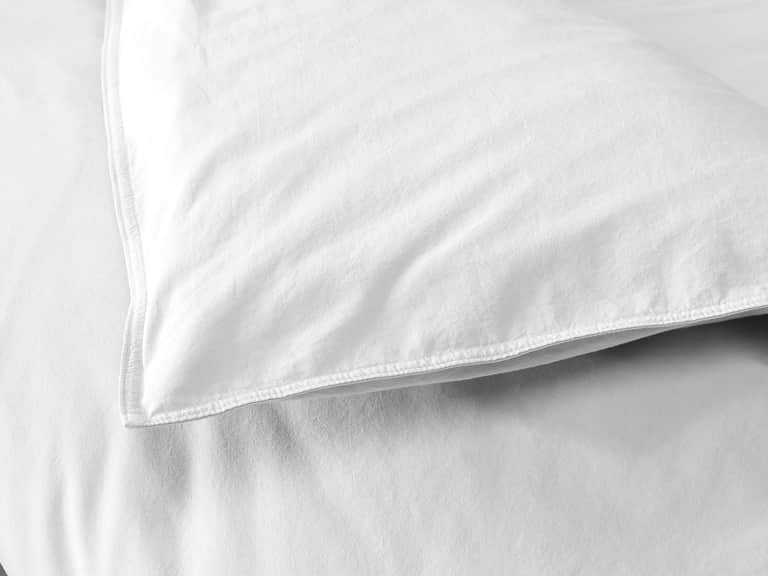
For a textured, color-rich take on the weave, the Tale Duvet Cover is made from cotton percale and garment-dyed to give its colors additional depth and its surface a cosy, textured appearance. It is a duvet cover rather than a sheet set, but it illustrates how percale’s crisp base can be interpreted in a more relaxed visual language.
Percale does wrinkle. For some, the softly creased finish is part of its charm; for others, it is a reason to make the bed promptly after drying or to iron. Fabric weight, finish, and laundering will influence the final look. If a perfectly smooth surface is essential, consider whether you are willing to spend extra time pressing it—or whether a different fabric’s natural finish may suit you better.
Sateen: smooth, fluid, and subtly luminous
Sateen offers cotton in a more polished register. Its weave places more yarn across the fabric’s surface, creating a smooth hand and a gentle sheen. It tends to drape more fluidly than percale, and its first impression is often softness rather than crispness. The result can feel inviting and softly enveloping, especially in a bedroom built around layered neutrals, rich colors, or a more tailored finish.
Choose sateen if you enjoy a silky-smooth surface and prefer a bed that feels substantial and soft to the touch. Its smoothness can be especially appealing in cooler weather, although comfort remains individual: some people sleep comfortably on sateen all year, while others who run warm may prefer percale or linen. The label “sateen” does not by itself tell you how heavy a particular sheet will feel. Fiber, yarn, and fabric weight still matter.
Sateen’s surface can show creasing differently from percale, and a sheen may lend it a more dressed appearance. That makes it a natural fit for someone who likes the bed to look composed without relying on a glossy finish. It is worth checking the care instructions before choosing: machine-washable cotton can be straightforward to maintain, but recommended water temperature, drying method, and any ironing guidance vary by item.
For an example of the category, the Sleep and Beyond Organic Cotton Sateen Sheet Set is described as 300-thread-count GOTS-certified organic cotton. Its fitted sheet has deep pockets designed for mattresses up to 18 inches, and the set is offered in a range of standard bed sizes. Those details offer useful practical information, though they do not replace checking the dimensions against your own mattress.
Another example is the Bovi Estate Sheet Set, made from long-staple cotton in a 500-thread-count sateen weave. Its description emphasizes a smooth hand and elegant sheen. The comparison is a reminder that thread count may help describe a fabric when the fiber and weave are also specified, but it should not be read as a stand-alone measure of comfort or quality.
Linen: relaxed texture, distinctive character
Linen has a personality all its own. Made from flax, it is known for a more textured, irregular surface and an easy drape that feels composed without looking overly formal. It is often selected for its relaxed appearance as much as for its physical feel. Linen rarely looks as crisp as percale or as sleek as sateen; its appeal is in variation, softness, and a surface that seems to become more familiar with time.
Many people value linen for its temperature-balancing feel. Its comfort depends on the weave, weight, room conditions, and the sleeper, but it is frequently chosen as an all-season option. The fabric can feel breathable in warm weather while remaining pleasant when temperatures drop. Rather than promising that linen will keep every sleeper at an ideal temperature, it is more accurate to say that its characteristic hand and drape appeal to people who want a natural-feeling layer that does not seem overly dense.
New linen can feel more substantial or textured than cotton, depending on its finishing. It typically softens with use and washing, though it retains its distinctive texture rather than turning into sateen. Its wrinkles are part of the look. If your ideal bed is perfectly smooth and pressed, linen may require a change in expectations; if you like a softer, lived-in finish, those creases can feel like a design feature rather than a flaw.
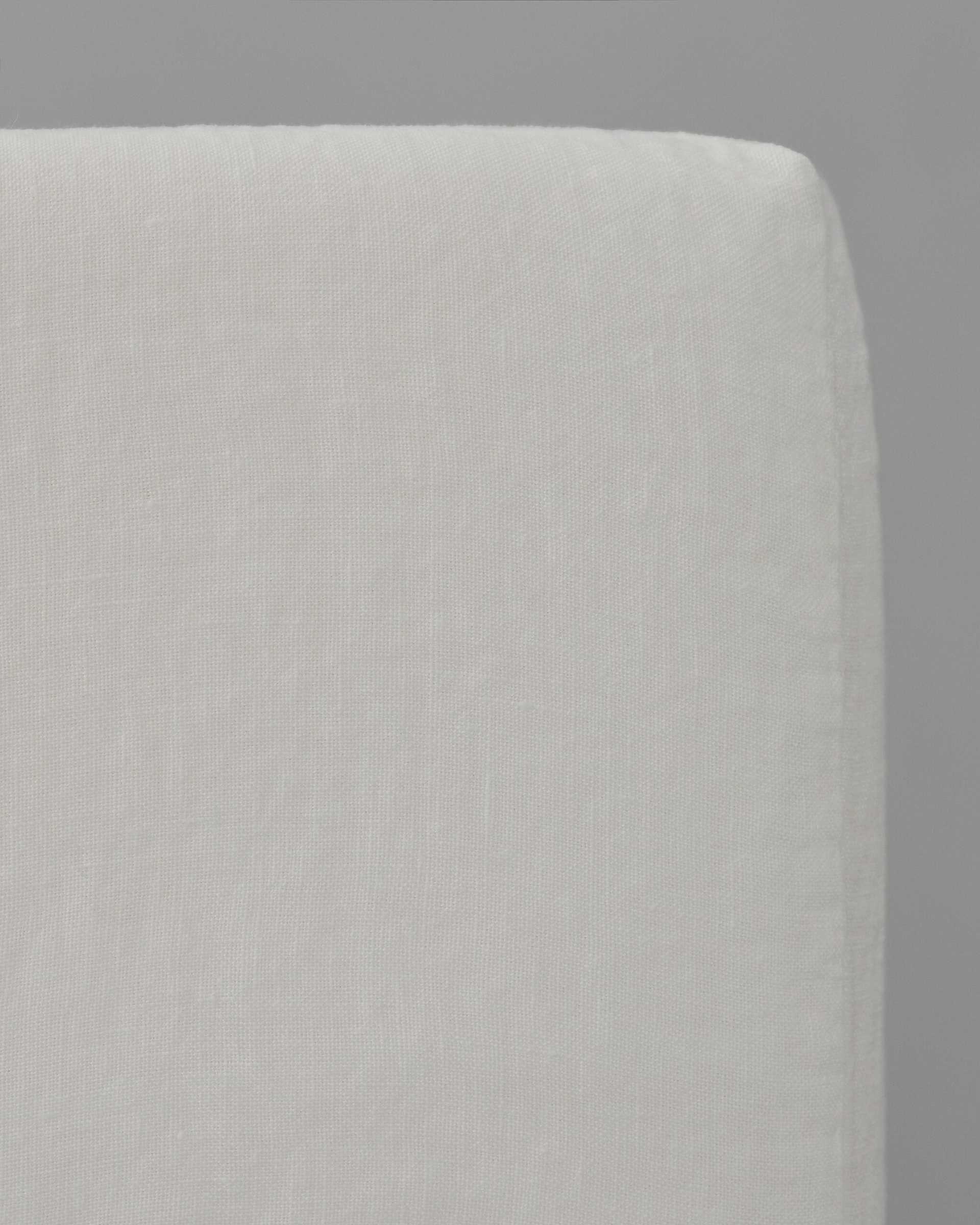
The Rem Fitted Sheets are made from 100% linen with a garment-dyed froissé finish. They are described as soft, suitable for all seasons, washable, and easy to care for without ironing. In practice, always consult the product’s own care label: cleaning recommendations are specific to the item, and a care claim should not be generalized to every linen sheet.
Linen’s distinctive look also makes it especially adaptable in a room. It can soften a minimal interior, complement wood and natural textures, or bring a slightly undone note to a more formal bed. Its range of shades and subtle color variation can add depth without relying on a pattern. Because linen has a clear visual identity, it is worth considering whether you want the sheet itself to be a quiet background or part of the room’s character.
A quick comparison of feel, breathability, and care
| Fabric | Typical feel | A good place to start if you want | Care consideration |
|---|---|---|---|
| Cotton percale | Crisp, light, matte | An airy hand and a fresh, structured bed | Wrinkles readily; check washing and drying guidance |
| Cotton sateen | Smooth, soft, subtly lustrous | A fluid drape and a polished surface | Follow the item’s specific washing and drying instructions |
| Linen | Textured, relaxed, naturally rumpled | A lived-in look and a fabric that softens with use | Wrinkles are characteristic; care varies by finish and product |
This comparison describes common tendencies, not absolute rules. A lightweight sateen may feel less substantial than a heavy percale; a softly finished linen may feel gentle from the first night. If possible, handle fabric samples or compare detailed product descriptions. When shopping online, look beyond the headline material to the fiber content, construction, fabric weight if provided, finishing, and care directions.
How to choose for your sleep preferences
Think first about what you notice at night. If you often feel too warm, or you like a cool, dry surface, percale is a sensible first comparison. If your priority is softness and a smooth feel, look at sateen. If you gravitate toward texture, a relaxed finish, and a bed that looks quietly unstudied, linen may be the most satisfying choice.
Then consider your surroundings. A bedroom that is warm for much of the year can make a lightweight, breathable-feeling fabric especially appealing. In a cooler climate, you may appreciate sateen’s softer drape, or linen’s substantial yet relaxed character. But sheets do not act alone. A duvet insert, mattress protector, mattress, pajamas, and the room’s ventilation all contribute to the sleep environment. Changing the duvet or the number of layers may have as much practical impact as changing the sheets.
Consider the full sensory picture, too. Do you enjoy the crisp sound and feel of freshly laundered cotton? Do you prefer a smooth surface that slides easily beneath your hand? Are small creases welcome, or do they make the bed seem unfinished? These are not superficial questions. Sheets are used every night, and an excellent choice is one whose feel and maintenance habits suit your actual life—not an idealized routine.
If you are unsure, start with the quality you most want to change. Someone who finds existing sheets too slick may prefer percale. Someone who finds them rough or stiff may want to explore sateen or a softer-finished linen. If the problem is that a fitted sheet slips off, neither a new weave nor a higher thread count will solve it unless the dimensions and pocket depth are right.
Thread count: useful context, not a verdict
Thread count refers to the number of threads in a given area of fabric, but the number alone cannot capture the quality of the fiber, the size and construction of the yarn, the weave, or the finish. It also cannot tell you whether a sheet will feel cool, crisp, soft, or heavy. A high number may sound impressive while revealing little about the qualities you actually care about.
Use thread count as one point of reference when it is provided transparently and alongside meaningful details such as fiber, weave, and construction. A 300-thread-count cotton percale and a 300-thread-count cotton sateen will not necessarily feel alike, because the weave differs. Nor does a higher count automatically mean better durability or a more breathable sheet. A coherent description of materials and care is more informative than a single prominent figure.
Certifications: what they can—and cannot—tell you
Certifications can help clarify how a textile or its production has been assessed, but each certification has a defined scope. A certification associated with organic textiles, for example, is not interchangeable with one that addresses chemical testing, manufacturing conditions, or another particular standard. Read the exact certification named by the maker, and consult the certifying organization if you want to understand what it covers.
A certification does not tell you whether percale will feel crisp enough, whether sateen will be too smooth for your taste, or whether linen will suit your laundry routine. Those are questions of construction, product details, and preference. Treat certification as useful information about specified standards—not as a substitute for understanding the fabric itself or as a guarantee of every possible environmental, health, or performance claim.
When a product description includes a certification, check that it applies to the item or material you are considering. If the details are unclear, look for documentation or a more precise explanation. Informed shopping depends on specific, verifiable claims rather than broad language such as “natural” or “eco-friendly,” which may not explain exactly what was assessed.
Fit matters as much as fabric
A well-chosen fabric is less enjoyable if the fitted sheet will not stay on the mattress. Before ordering, measure the mattress’s length and width, then check its depth. Include a mattress topper or protector in that measurement, since additional layers can affect how securely a fitted sheet fits. A fitted sheet’s pocket depth and elastic construction are practical details, not fine print.
Do not assume that all queen, king, or twin sizes have identical dimensions across brands and countries. Check the size chart for the specific product and compare it with your bed. Split king and adjustable-bed arrangements need particular attention: a set may include two separate fitted sheets, while a standard king set may not suit that configuration. If the mattress has unusual dimensions, a named size alone may not be enough—look for exact measurements.
Also check what the set contains. A sheet set might include a flat sheet, fitted sheet, and one or more pillowcases, but the number and dimensions can vary by size. Confirm the pillowcase size, the presence of a flat sheet, and any included extras before you buy. These details help prevent a pleasant fabric discovery from becoming a frustrating fit problem.
Care: match the fabric to your routine
Care instructions are part of a fabric’s everyday character. Before purchasing, decide how you prefer to do laundry. If you want a bed that looks pressed and smooth, a fabric that naturally creases may demand more work than you want to give it. If you are happy with a relaxed surface, linen or softly finished percale may be easy to live with. Sateen’s appearance and care needs depend on its particular construction and maker’s recommendations.
Always follow the label for the item in your hands rather than applying a generic rule to every cotton or linen sheet. Water temperature, detergent, drying method, and ironing instructions can differ. Avoid assuming that a fabric is suitable for high heat or an aggressive wash simply because its fiber is familiar. Thoughtful care helps preserve the surface, fit, and color, and can reduce unnecessary wear.
Wash bedding before first use if the manufacturer’s instructions recommend it, and do not overload the washing machine: textiles need room to rinse and move. Separate colors as appropriate, and remove sheets from the dryer promptly if you want to minimize creasing. These small habits are practical, but they are also a way of making a considered purchase last longer.
A simple decision guide
- Choose percale if you want a crisp, matte, airy feel and do not mind a surface that can wrinkle.
- Choose sateen if you prefer smooth cotton, a subtle sheen, and a more fluid drape.
- Choose linen if texture, a relaxed appearance, and a fabric that softens with use are part of the appeal.
- Check the fit by measuring mattress depth, including any topper, and comparing exact product dimensions.
- Read beyond the headline for fiber content, weave, finishing, care, set contents, and certification details.
- Choose for real life by weighing your temperature preferences and laundry habits alongside appearance.
The final word
Percale, sateen, and linen each offer a different kind of comfort. Percale brings a crisp, breathable sensibility; sateen lends cotton a smoother, more luminous finish; linen offers texture and an easy, softly rumpled presence. Their distinctions begin with fiber and weave, then become more nuanced through finishing, weight, construction, and care.
Rather than looking for a universally perfect sheet, decide what you want to feel when you climb into bed. Start with your preference for crispness or softness, consider whether you sleep warm, and be honest about how much ironing you are willing to do. Then verify dimensions, read the care label, and treat thread count and certifications as parts of a fuller picture rather than final answers.
The most elegant bed is not necessarily the most elaborate. It is the one that feels right at the end of the day—and makes the ordinary act of turning in feel a little more considered.